A few weeks ago I posted my desire to make a Chickpea Flour Omelette . The source of the recipe I used admitted that while the recipe is simple mastering the technique may not be. I burned the first attempt. The second was a mushy mess. Today I tried again. I achieved success. So what was the difference? The temperature or heat setting. However your stovetop determines a medium setting that is the one you want. I also used a tip from another source; cover the skillet for even cooking. My taste tester, my hubby, said it was good.
Now I can tailor the flavor profile to our taste. My first tip is to use leftover veggies already cooked. It saves time and avoids waste.
The other day, I made chickpea flour tofu. The person’s whose instructions I used said, the recipe was simple but you had to master the process or technique. She wasn’t kidding. The first batch, I let get too firm. The second was just smooth enough to give me a firm, sliceable tofu.
I cubed a portion of the firm to bake and added it to some vegetable Lo Mein. The too, too firm I crumbled and added to a vegan pot pie filling to replace chicken. Normally, it would be vegetables only in the filling. Both meals were delicious. My husband said they were a repeat. It might be a while before I buy soy based tofu again. This was cheaper and convenient.
They say necessity requires you to get inventive. I doubt if I would have tried this if I had been able to find regular tofu in this grocery store wasteland.
In one of the vegan food groups I belong to, it was mentioned that there was a scarcity of tofu. I had not experienced that then but a few days later it happened. I went to my local market where I could always find a variety of tofu. There were only two packages of firm tofu. I bought one and used it for breakfast, tofu scramble. A few days later I went to that same market and there was none. I went to another market and there was none. I really wanted to try that frittata recipe. I went online and made two amazing discoveries: chickpea flour tofu and a chickpea flour frittata recipe.
In order to make the frittata with this recipe, I needed another unfamiliar ingredient, black salt, also known as kala nanak. Black salt turns out to be a middle eastern salt that smells like egg yolks. It gives the mixture an eggy taste. Where do I find this? First I checked Whole Foods and then Trader Joe’s. Not there. Well to shorten this story, I found it in a local Indian market. This market had not only the black salt but a plethora of other spices and products usually used in vegan recipes. I want have to search for chickpea flour either. This market, another amazing find. It’s near my home. Yes!
Back to the frittata. I made it this morning and it was good. I had to cook it longer than stated but I guess it’s because of that Houston humidity.
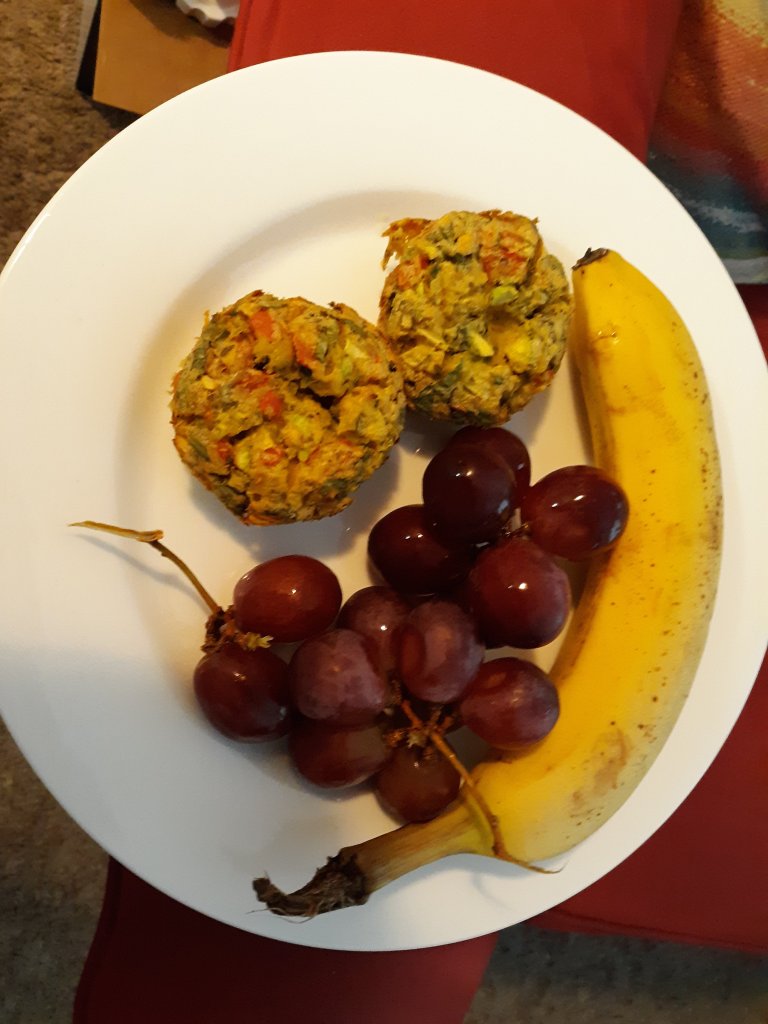
Chickpea Frittata, Grapes and Bananas This morning’s breakfast.
Note:
Black salt powder is pink like Himalayan sea salt. It is also called kala nanak.
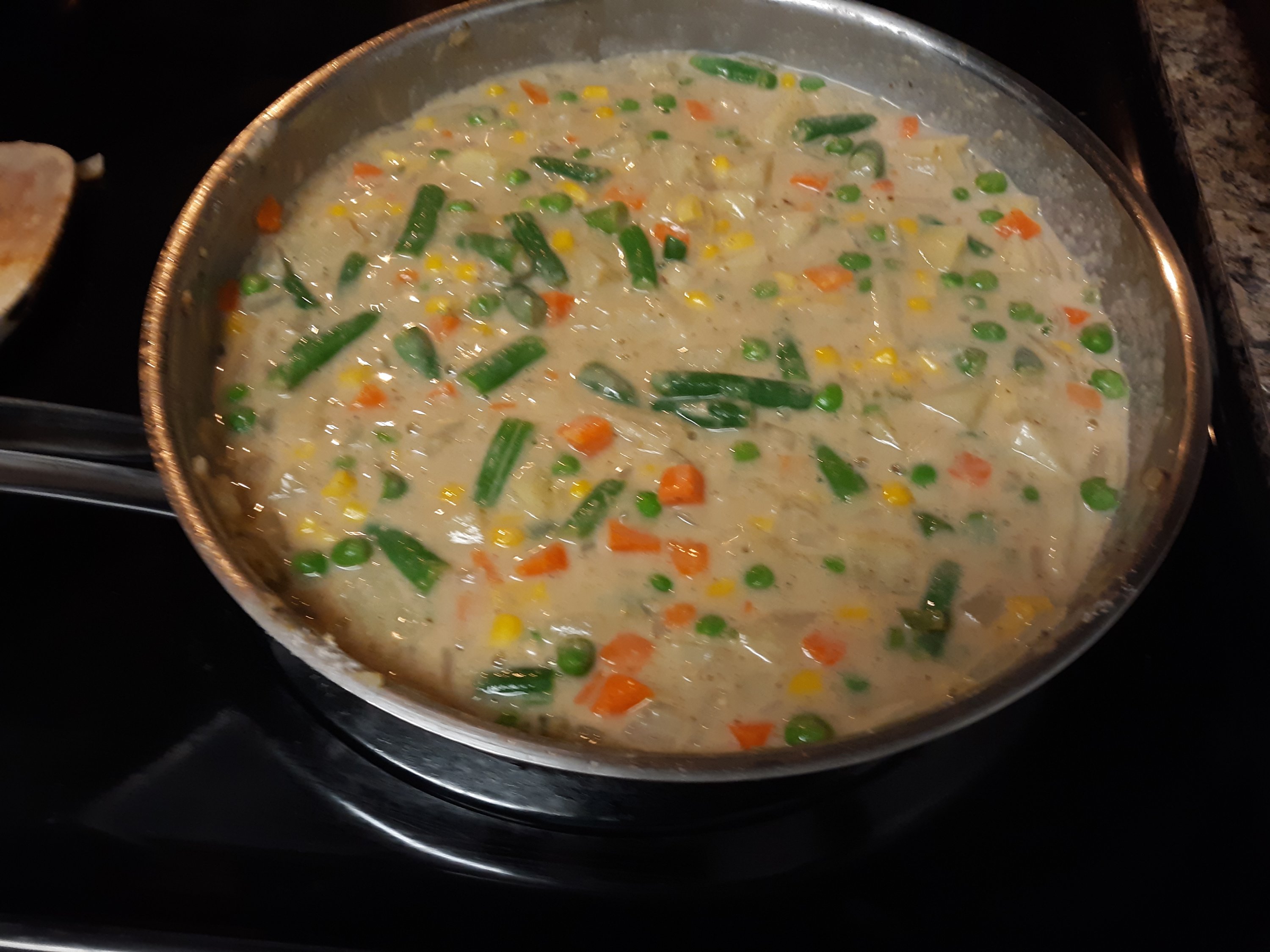
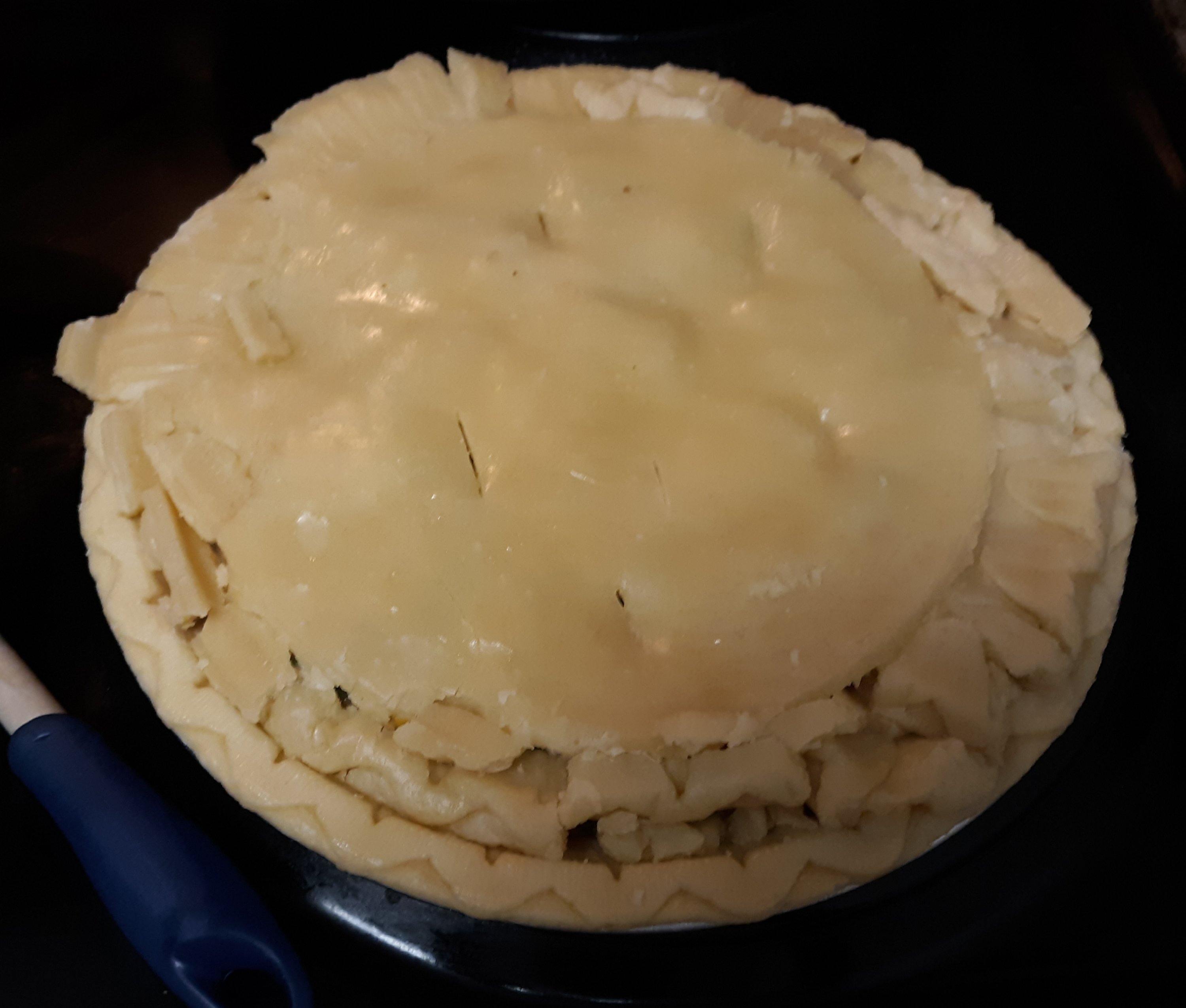
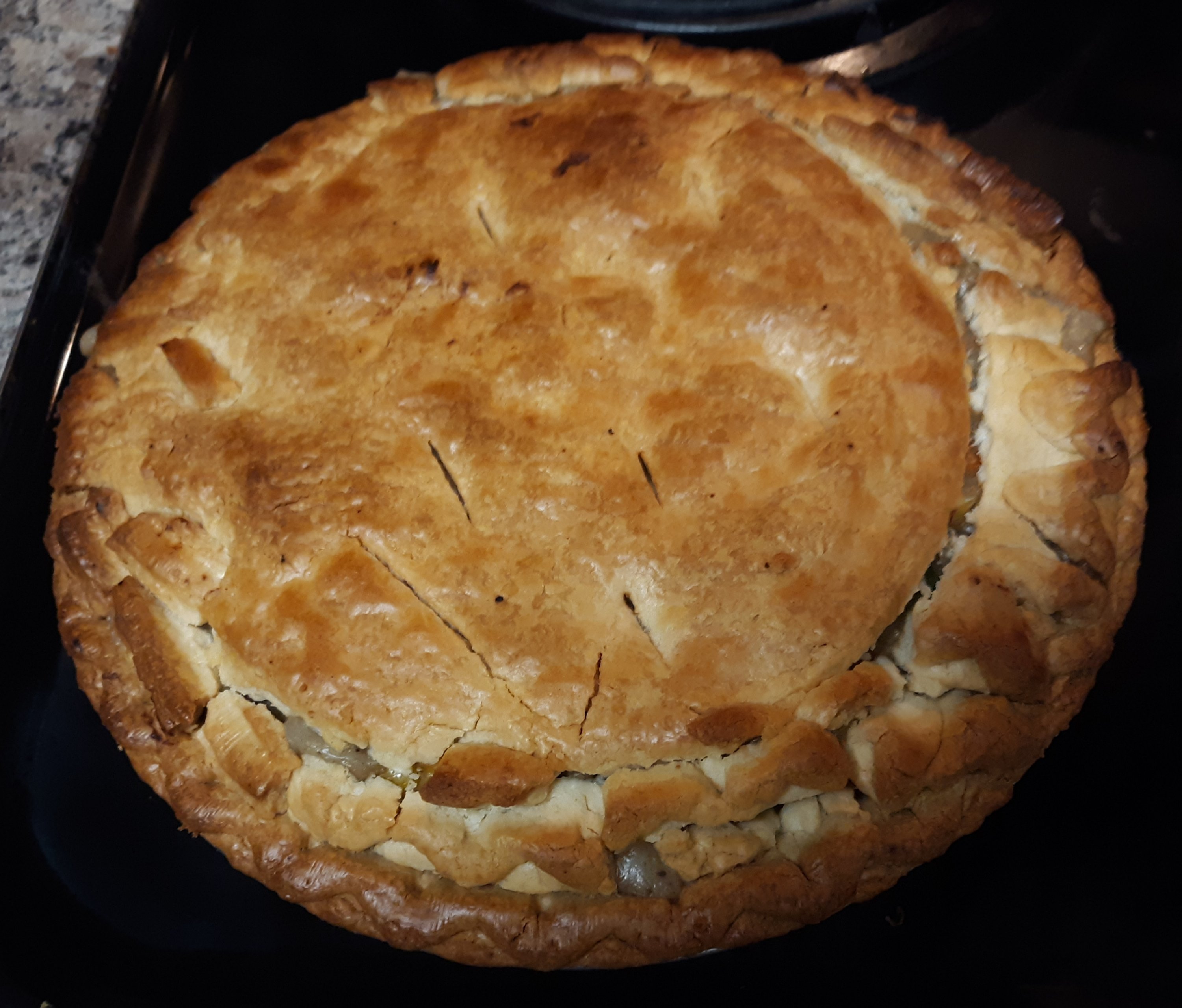
Today I made a vegan pot pie again. I found a recipe I liked but I didn’t have all the ingredients at least not exactly like the one’s called for.
She used all purpose flour and I used oat flour. She used almond milk and I used cashew milk. She used vegetable stock and I used a little water and herbs.
I did think I had a stroke of genius when I decided to make it. Last time my crust was too thick. I thought why not use the store-bought pie crust that I had bought for sweet potato pies. One for the bottom, the second for the top. I thawed the pie crust but I couldn’t get it out of the tin without it falling apart. I pieced it together and hoped for the best. Hence, the Frankenstein vegan pot pie.
The results didn’t look so bad.
The taste was good but I may change the herbal profile. My husband said it was a little sweet. I’m very satisfied.
Tonight (Tuesday) I went back to the lab, finally. The last year or so I have been buying Plant-based meat substitutes, (that usually means processed soy). It is expensive and I discovered through experience, causes weight gain. I thought if they can make it so can I. Tonight was the night.
I decided to try making crumbles for tacos. I marinated TVP in a Mexican spiced marinade. I added vital wheat gluten and put it in a skillet to cook like ground beef. Added a little salt to taste.
The next part of the experiment was a homemade corn tortilla baked in a tostada shell. Once I began I discovered I didn’t have very much Masa. I ground corn meal but it wasn’t as fine as masa. I used it anyway. Worked out okay. Will be better next time.
So here is dinner. Homemade tostada shell with home cooked black beans, marinated homemade meatless crumbles, lettuce and tomato topped with nutritional yeast.
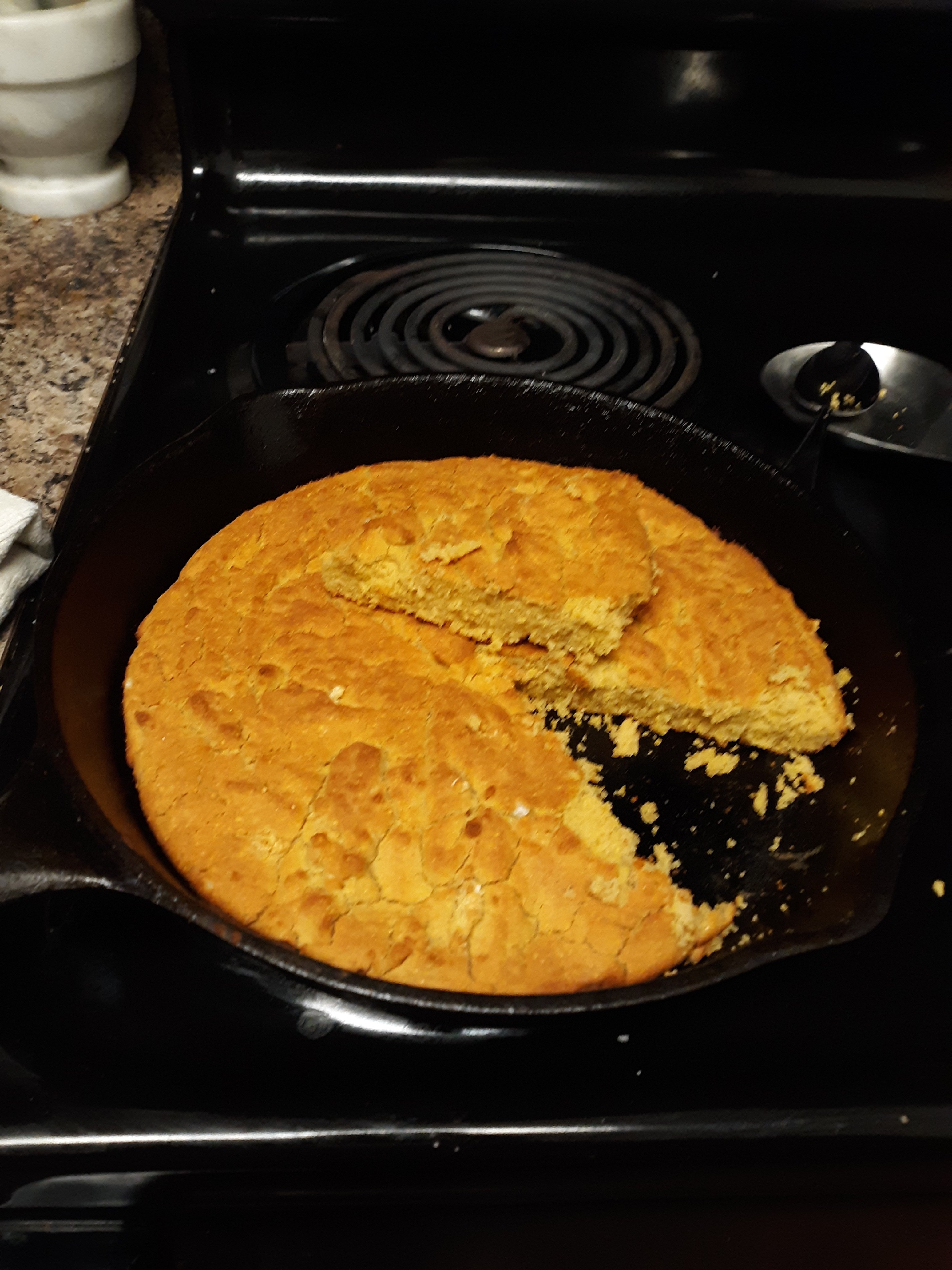
I guess you’re asking, “What is this woman’s obsession with cornbread?” I’m a southern born and bred girl. There are just some things that have to be eaten with cornbread. My experiment was to answer the question about flour substitutions to teff or oat flour. Today I used Quinoa flour. I have eaten quinoa but I have never used the flour. I used my gluten-free cornbread recipe and substituted quinoa for soy flour. The taste was great but it didn’t rise as much as expected. I was very pleased with the browning. The other breads didn’t brown as pretty. This is not my last experiment with cornbread. My next experiment will be using aguafaba instead of Ener-G egg replacement. I’ve read that aguafaba can be whisked to form a meringue like product that can be used in baked goods in place of eggs. It’s suppose to make a lighter texture in baked items. Stay tuned.The soup also provided an opportunity for experimentation. I made vegetable soup with meatless Italian sausage. Pretty straight forward. The problem: to much basil. I used Young Living Essential Oil’s basil vitality. This oil is very concentrated and intense in flavor. I only intended to use 1 drop but a second one dropped before I could lift the bottle. So how do I neutralize this basil. I added chickpeas to the soup and let it simmer. Side note: I cooked a batch of chickpeas earlier. I avoid can goods when I can. The chickpeas mellowed the basil intensity and added more texture to the soup. This was a great lunch.
Most of us who have changed to a plant-based eating lifestyle are on a continuous search for great tasting meat substitutes.
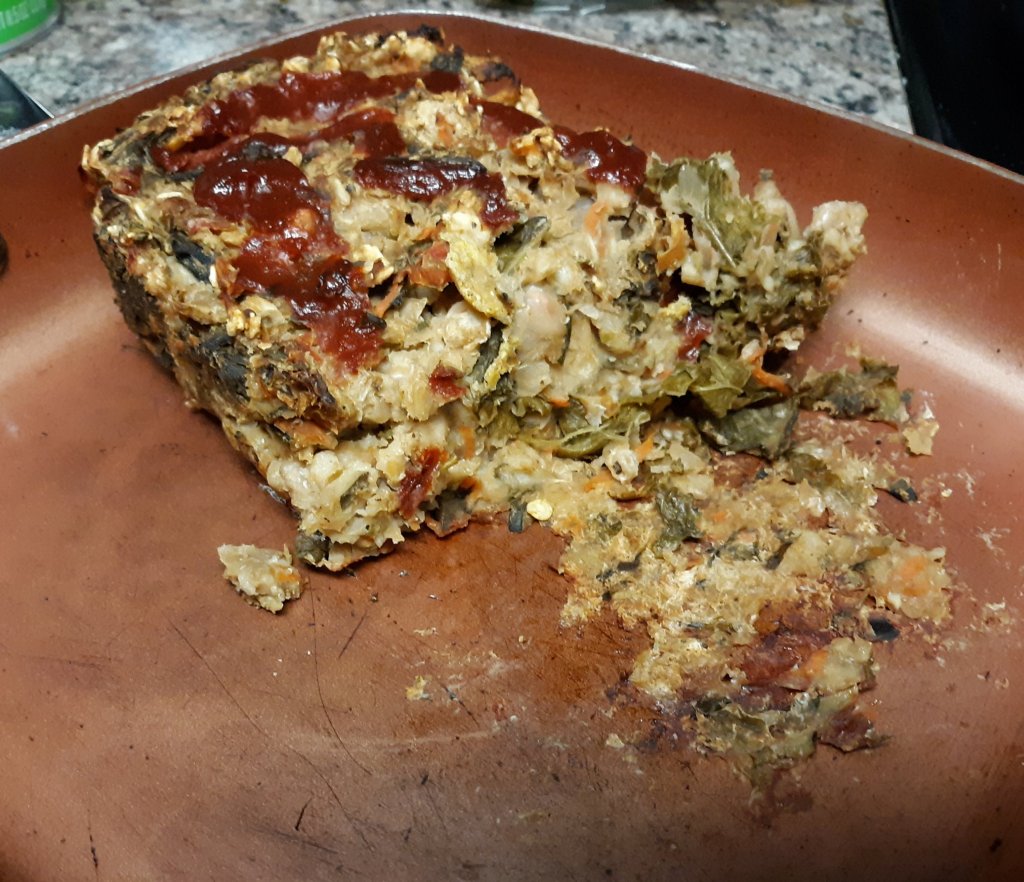
Yesterday I prepared the Esselstyn’s “eat loaf” recipe contained in their The Prevent and Reverse Heart Disease Cookbook. I refrigerated it and we ate it for dinner today. I was so involved with getting the other dishes prepared that I forgot to take a picture. The picture below is what is left of the loaf. If you decide to try this, it makes enough for two loaves.
Heart healthy “Eat Loaf”
This loaf can be a meal with nothing else. It has so many different veggies; carrots, greens, beans, onions, garlic and for added texture, oats.
I find it very interesting that my most viewed post was written in 2016. I had begun my research and experimentation with heart healthy recipes. I was trying gluten-free flours to make familiar food items. This is when Teff flour entered my life. I had never heard of it before. I had made soup and I wanted some cornbread. I decided to use teff flour in making it. I shared the outcome and it has been my most viewed post. I don’t know why. Is the interest the Teff flour or the cornbread? I wonder.
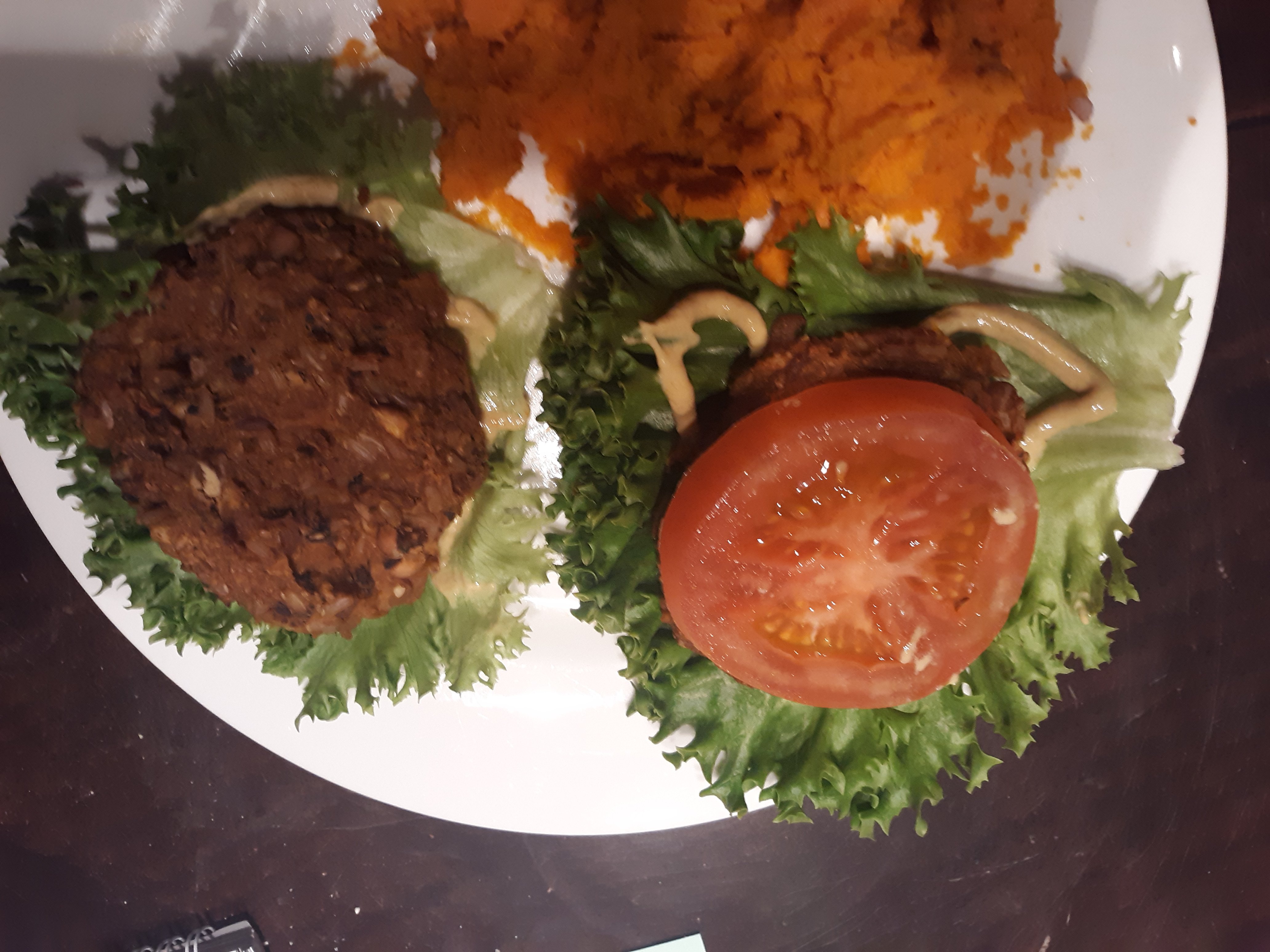
Yes that is the name of the burgers. Anne Esselstyn and Jane Esselstyn have the recipe in their cookbook, Prevent and Reverse Heart Disease. It is the Smokey, Oat, Bean Burger. Because I had to make some substitutes I renamed it. My version is the Smokey, Flax and Pea Burger. I discovered that I was out of oats and I didn’t have any cannellini beans. I substituted ground flax seeds for oats and black-eyed peas for beans. The seasonings were the same. It was so good. I served it with romaine lettuce leaves as the bun and tomatoes with brown mustard and hot sauce. I will try the recipe again with oats and beans.
Sometimes looking back over old posts remind you of the reasons you’re doing certain things now. My husband nor I are gluten intolerant so why do I have a gluten-free vegan cookbook? When did no oil cooking become important and why?
I wasn’t looking for these answers but I stumbled over the post that gave them. It was simple. His cardiologist instructed us to do that. I also unearthed The Prevent and Reverse Heart Disease Cookbook that is plant-based and oil free. I purchased this at the beginning of our journey 3 years ago after watching an Engine 2 video. I read through it and now I am adding the recipes to my re-energized food preparation experiences.